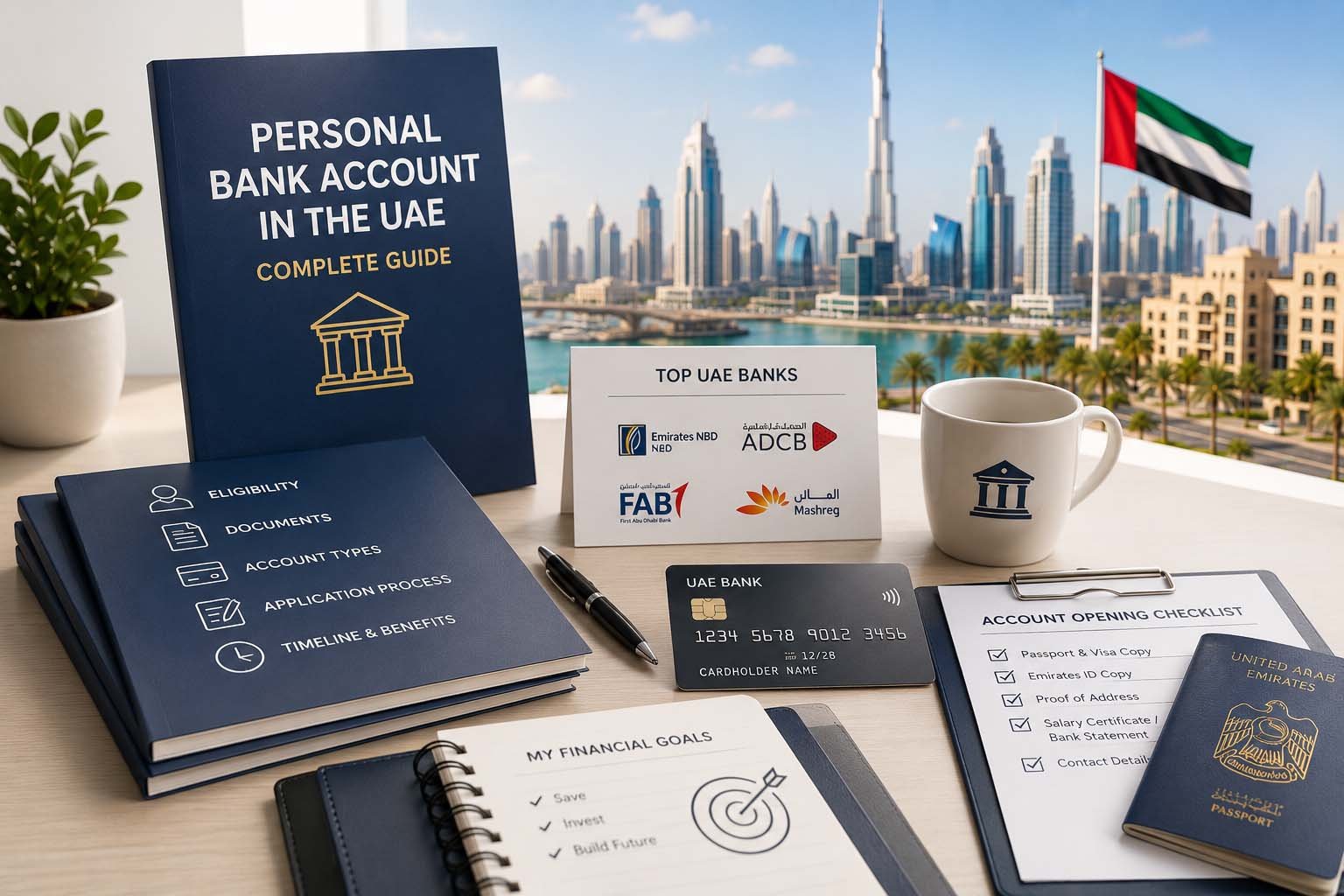
How to Open a Personal Bank Account in the UAE: Complete Guide
Everything UAE residents and non-residents need to know before opening a personal bank account Opening a personal bank account is one of the first practical steps toward settling into life in the UAE whether you've just relocated for work, you're a long-term resident switching banks, or you're based overseas and want a UAE account for savings, property, or business reasons. The process is generally straightforward for UAE residents and considerably more involved for non-residents, and the right approach depends heavily on your residency status, income profile, and what you actually need the account for. This guide walks through the full picture: who can open an account, the main account types available, the documents banks typically ask for, realistic timelines, and the most common reasons applications get delayed. If you're specifically a non-resident, or you want a deeper dive into resident eligibility or non-resident account options, we've linked dedicated guides for each further down this page.
TL;DR
UAE Bank Account
✓UAE residents with a valid residence visa and Emirates ID can generally access the full range of accounts current, savings, and fixed deposit often with fast digital onboarding.
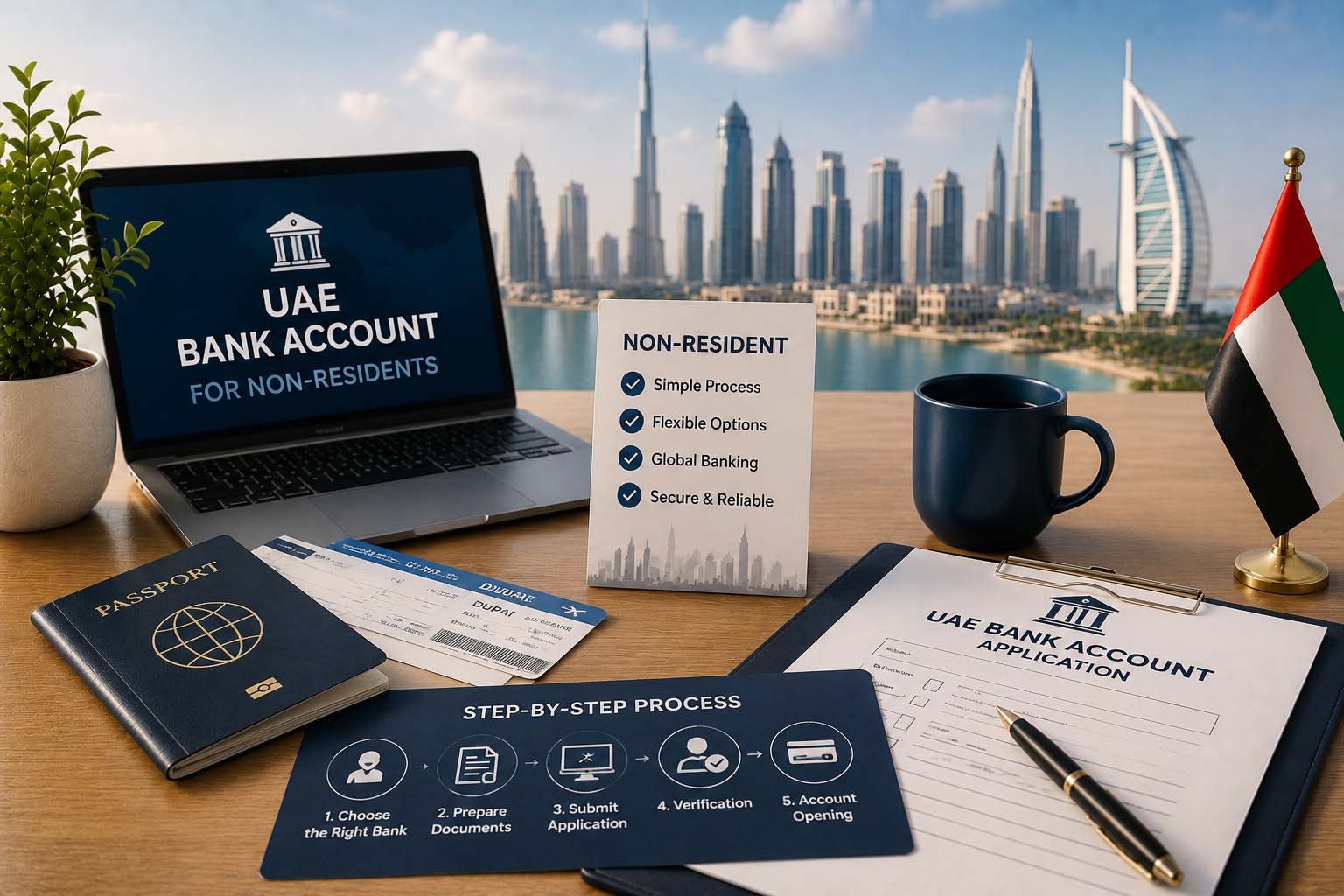
✓Non-residents can open an account too, but are typically limited to savings or fixed deposit accounts, usually require a branch visit, and face closer scrutiny of source of funds.
✓No single minimum salary or minimum balance applies UAE-widethese are set individually by each bank and vary by account type, so always confirm current figures directly with your chosen bank.
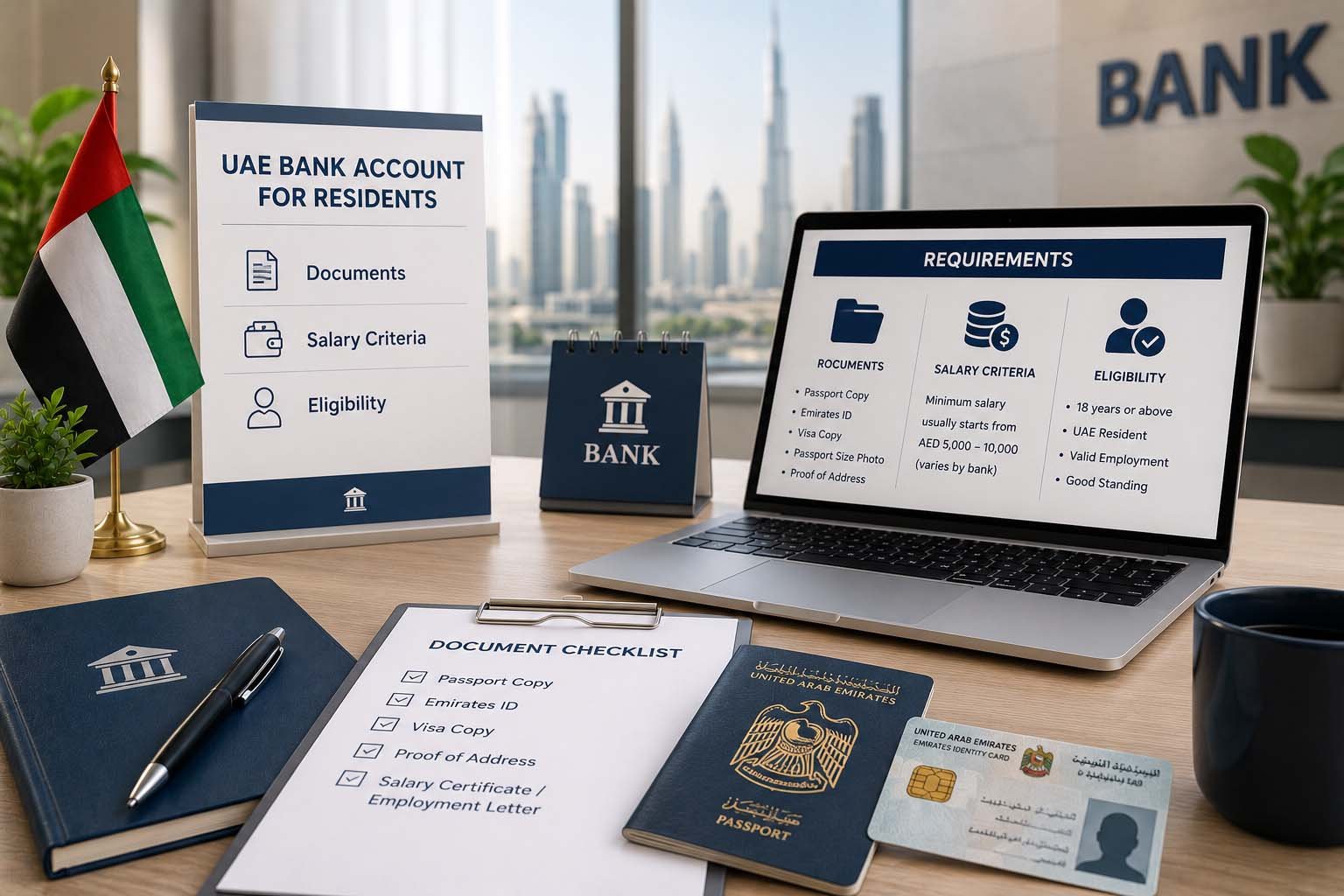
✓Core documents for residents: passport, Emirates ID, proof of address, proof of income. Non-residents typically need additional documents such as a bank reference letter and clearer source-of-funds evidence.
✓Timelines vary widelyfrom same-day digital account opening for some residents to several weeks for non-resident applications, depending on the bank and documentation.
✓No advisor or platform can guarantee bank account approval every application is assessed individually by the bank's own compliance and risk process.
Who Can Open a Personal Bank Account in the UAE?
Every bank operating in the UAE is licensed and supervised by the Central Bank of the UAE, and every account regardless of the applicant's residency status is subject to the bank's own Know Your Customer (KYC) and anti-money-laundering (AML) checks. Beyond that shared regulatory baseline, what you're eligible for depends heavily on whether you hold UAE residency.
UAE Residents
If you hold a valid UAE residence visa and Emirates ID, you generally have access to the full suite of personal banking products: current accounts with debit cards and cheque books, savings accounts, fixed deposits, and increasingly, fully digital accounts opened via a banking app without a branch visit. Most banks also offer salary accounts specifically designed to receive employer wage transfers, sometimes with preferential terms.
Non-UAE Residents
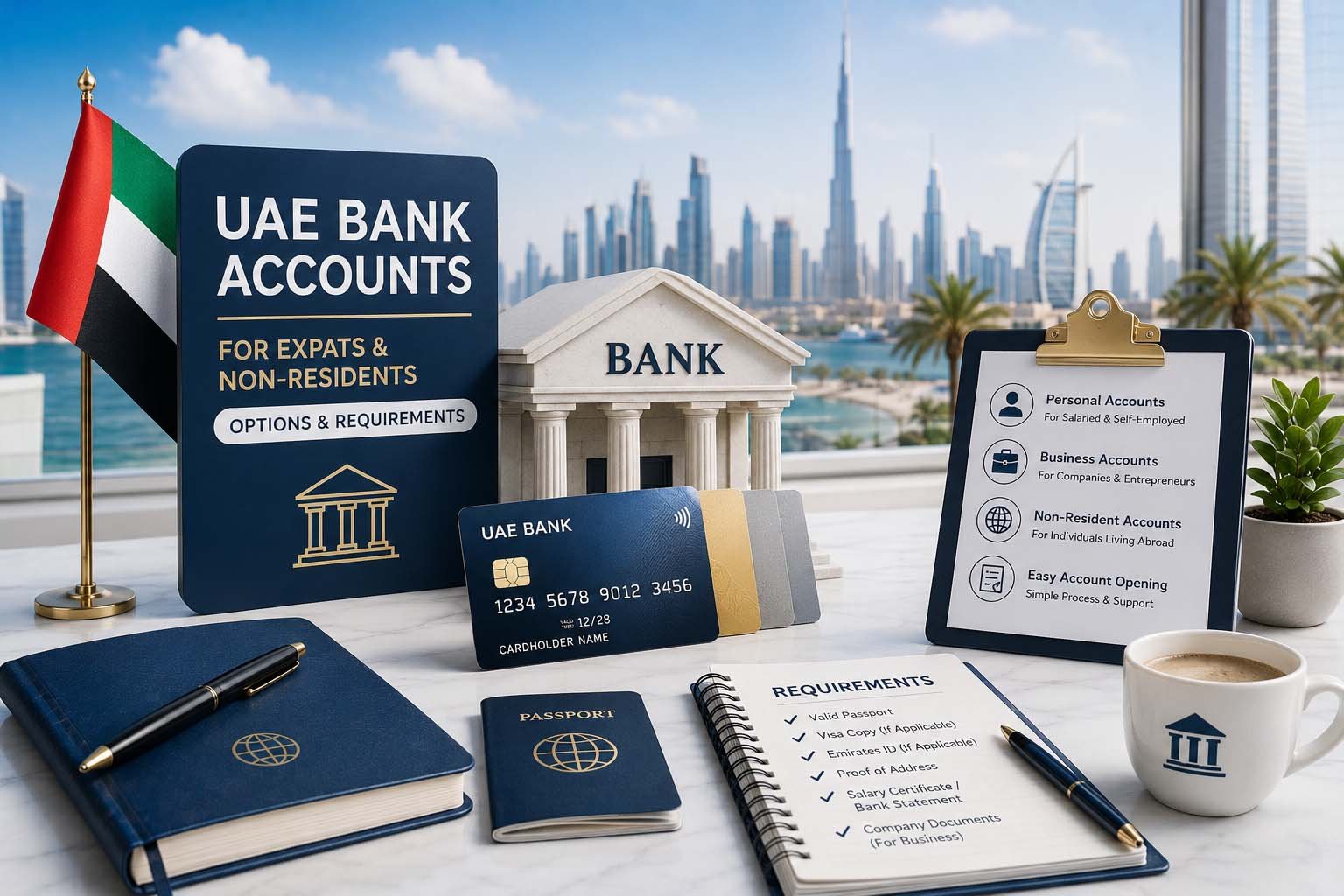
Non-residents including overseas investors, property owners, and individuals who simply want a UAE account without relocating can also open accounts, but the options are narrower. Most banks that accept non-resident applicants restrict them to savings or fixed deposit accounts rather than full current accounts, typically require an in-person branch visit, and apply enhanced due diligence on source of funds. Not every UAE bank accepts non-resident applications at all, so the choice of bank matters more for this group.
For a complete breakdown of non-resident eligibility, documentation, and account limitations, see our dedicated guide, How to Open a UAE Bank Account as a Non-Resident, and for resident-specific detail on documents, salary expectations, and eligibility, see UAE Bank Account Requirements for Residents: Documents, Salary & Eligibility
Types of Personal Bank Accounts in the UAE
Which account type suits you depends on how you plan to use the money, and your residency status will influence which of these are actually available to you.
Current Accounts
Designed for everyday transactions salary deposits, bill payments, debit card spending, and in many cases a cheque book and overdraft facility. Current accounts are generally available to UAE residents and are usually not offered to non-residents.
Savings Accounts
Built for holding and growing a balance over time, typically earning interest or profit (on Islamic accounts) while offering more limited transaction features than a current account. This is often the primary sometimes the only account type available to non-residents.
Fixed / Term Deposit Accounts
A lump sum placed with the bank for a set term in exchange for a fixed rate of return, with reduced returns or penalties for early withdrawal. Available to both residents and, at many banks, non-residents.
Digital-First Accounts
A growing number of UAE banks and digital-only providers offer accounts that can be opened primarily or entirely through a mobile app, often with lower or no minimum balance requirements. These are typically aimed at residents, since identity verification usually relies on Emirates ID.
Documents You'll Typically Need
Exact requirements vary by bank and by applicant type, but most UAE banks ask for a broadly similar core set of documents from residents:
- Valid passport, with UAE residence visa page
- Emirates ID (original or application receipt)
- Proof of UAE address tenancy contract, Ejari, or a recent utility bill
- Proof of income or employment salary certificate, employment contract, or recent payslips
- Recent bank statements, typically covering the last three to six months
Non-residents are generally asked for additional documents on top of this, since the bank cannot rely on a UAE residency status or Emirates ID as part of its verification. Commonly requested extras include a reference letter from your existing bank, proof of address in your home country, and clearer documentation of the source of funds being deposited.
Salary, Income & Minimum Balance Considerations
There is no single, UAE-wide minimum salary or minimum balance requirement set by law or by the Central Bank. These thresholds are a matter of individual bank policy, and they vary by bank, by account tier, and can change over time. Some banks offer accounts with no minimum salary requirement at all, particularly digital or entry-level accounts, while premium or elite banking tiers require substantially higher income or asset levels.
If you don't have a fixed monthly salary for example, you're a freelancer, self-employed, or an investor some banks and digital providers accept alternative proof of income, such as a freelance permit with business statements, or evidence of investment or rental income. Because these policies differ meaningfully between banks, it's worth comparing a few options rather than assuming one figure applies everywhere, or getting guidance matched to your specific income profile.
Step-by-Step: How to Open a UAE Bank Account
The general process looks similar across most banks, though the details differ by residency status and by whether you apply digitally or in person:
- 1. Decide which account type suits your needs current, savings, fixed deposit, or digital-first
- 2. Compare banks based on your residency status, income profile, and any specific requirements (e.g. multi-currency support)
- 3. Gather your documents in advance incomplete documentation is the single most common cause of delay
- 4. Submit your application online, via app, or at a branch, depending on the bank and your eligibility
- 5. Complete identity verification in person, via video call, or biometric app verification depending on the bank
- 6. Wait for the bank's KYC/compliance review, which determines final approval
- 7. Fund and activate your account once approved
How Long Does It Take?
Timelines vary considerably and are not standardised across the market. Residents applying digitally with straightforward documentation can sometimes be approved within a day or two, while a full branch-based account can take several business days. Non-resident applications typically take longer often extending to one to two weeks or more because of the additional compliance checks and, in many cases, an in-person verification requirement. Treat any specific number quoted to you as an estimate rather than a guarantee, since actual timing depends on your bank, your documentation, and your individual risk profile.
Common Reasons Applications Are Delayed or Declined
- Incomplete or inconsistent documentation, especially mismatched address or income evidence
- Unclear or undocumented source of funds, particularly for larger deposits or non-resident applicants
- Applying to a bank or account tier that doesn't typically serve your residency status or income profile
- Missing or expired identification documents
- Risk factors specific to the applicant's nationality, country of residence, or occupation, which some banks assess more cautiously than others
No bank account opening service, including ClearRate, can guarantee approval the final decision always rests with the bank's own compliance and risk assessment. What a good service can do is help you prepare a complete, well-matched application and identify banks more likely to suit your specific profile.
Frequently Asked Questions
1. Can I open a UAE bank account before I arrive in the country?
In some cases, yesa small number of banks allow pre-arrival applications or offer non-resident accounts that can begin remotely, but most resident accounts require your Emirates ID, which is only issued after you arrive and complete your residency process. Confirm with your chosen bank whether pre-arrival applications are supported.
2. What is the minimum salary needed to open a bank account in the UAE?
There is no fixed, UAE-wide minimum this is set individually by each bank and account type, and some accounts have no minimum salary requirement at all. Always check the current figure directly with the bank you're applying to.
3. Can I open a UAE bank account without a job?
Yes, in some cases. Freelancers, self-employed individuals, and those with other income sources (such as investments) may still qualify, particularly through digital or lower-tier accounts that accept alternative income proof rather than a formal salary certificate.
4. How many bank accounts can I have in the UAE?
There is generally no legal limit on the number of personal bank accounts an individual can hold across different UAE banks, though each account is subject to its own eligibility and documentation requirements.
5. Do I need to visit a branch to open an account?
Not always for residents many UAE banks now offer app-based digital account opening using Emirates ID verification. Non-residents, however, are more commonly required to visit a branch in person as part of enhanced verification.
6. What's the difference between a current account and a savings account?
A current account is built for everyday transactions and usually includes a debit card and sometimes a cheque book, while a savings account is designed to hold and grow a balance over time with more limited transaction features. Non-residents are typically restricted to savings-style accounts.
7. Can expats open a UAE bank account the same way as UAE nationals?
Expats who hold a valid UAE residence visa and Emirates ID follow largely the same process as UAE nationals, though some banks offer nationality-specific accounts or products. Expats without UAE residency are treated as non-residents, with a more limited and more heavily scrutinised process.
8. Why was my UAE bank account application rejected?
Common reasons include incomplete documentation, unclear source of funds, applying to an account tier that doesn't match your income or residency profile, or risk factors the bank's compliance team assessed cautiously. Banks are not required to disclose the exact reason for a decline.
9. Is it faster to open an account with a digital bank in the UAE?
Often, yes, for eligible residents digital-first accounts can sometimes be approved within a day using app-based identity verification, though this depends on the provider and your documentation being complete and consistent.
10. Can ClearRate guarantee my UAE bank account will be approved?
No advisory service can guarantee approval, since that decision is made solely by the bank's own compliance and risk process.ClearRate can help you prepare a complete, well-matched application and identify banks more likely to suit your specific profile.
Related Guides
- How to Open a UAE Bank Account as a Non-Resident
- UAE Bank Account Requirements for Residents: Documents, Salary &Eligibility
- UAE Bank Accounts for Expats and Non-Residents: Options &Requirements
Official Resources
|
Ready to Open Your UAE Bank Account? ClearRate's Personal Bank Account Opening service helps you prepare a complete, well-matched application and identify UAE banks suited to your residency status and income profile whether you're a resident opening your first account or exploring your options from abroad. We can't guarantee bank approval, but we can help you apply with confidence. |