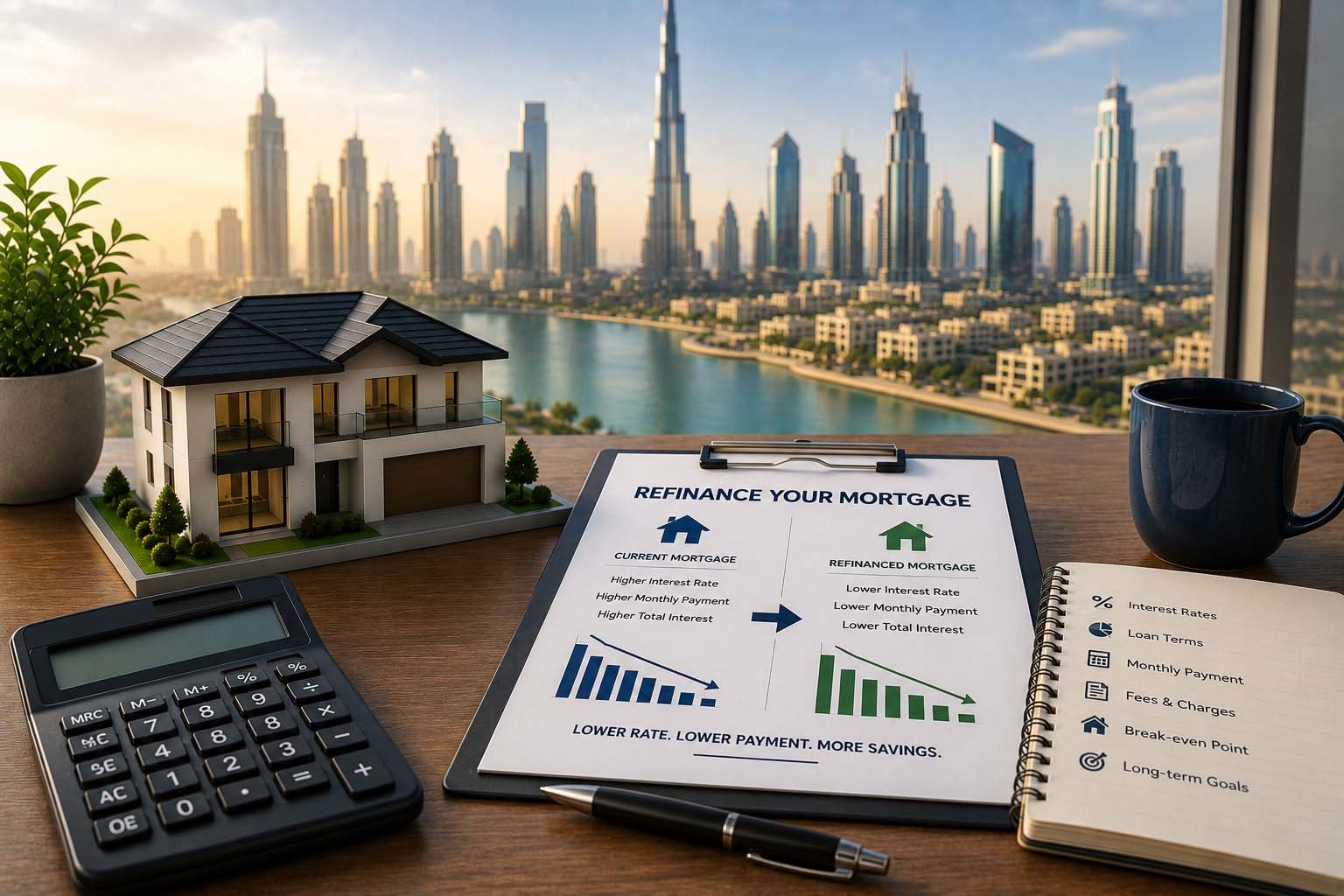
5 Signs It's Time to Refinance Your Home Loan
Refinancing isn't something most homeowners think about until a specific trigger prompts it a jump in monthly payments, a friend mentioning a much lower rate, or simply a sense that the mortgage taken out years ago no longer reflects today's market. Here are five clear signs it might be time to look seriously at refinancing your UAE home loan.
TL;DR
- Your fixed-rate period has ended and you've reverted to a noticeably higher variable rate.
- There's a meaningful gap generally 0.5%–0.75% or more between your current rate and what's available in the market today.
- Your financial profile has improved significantly since you took out the original loan.
- You want to release equity for renovations, investment, or another financial goal.
- You're looking to switch between fixed and variable, or shorten your remaining term.
- If two or more of these apply, running the numbers through a refinance calculator is a sensible next step.
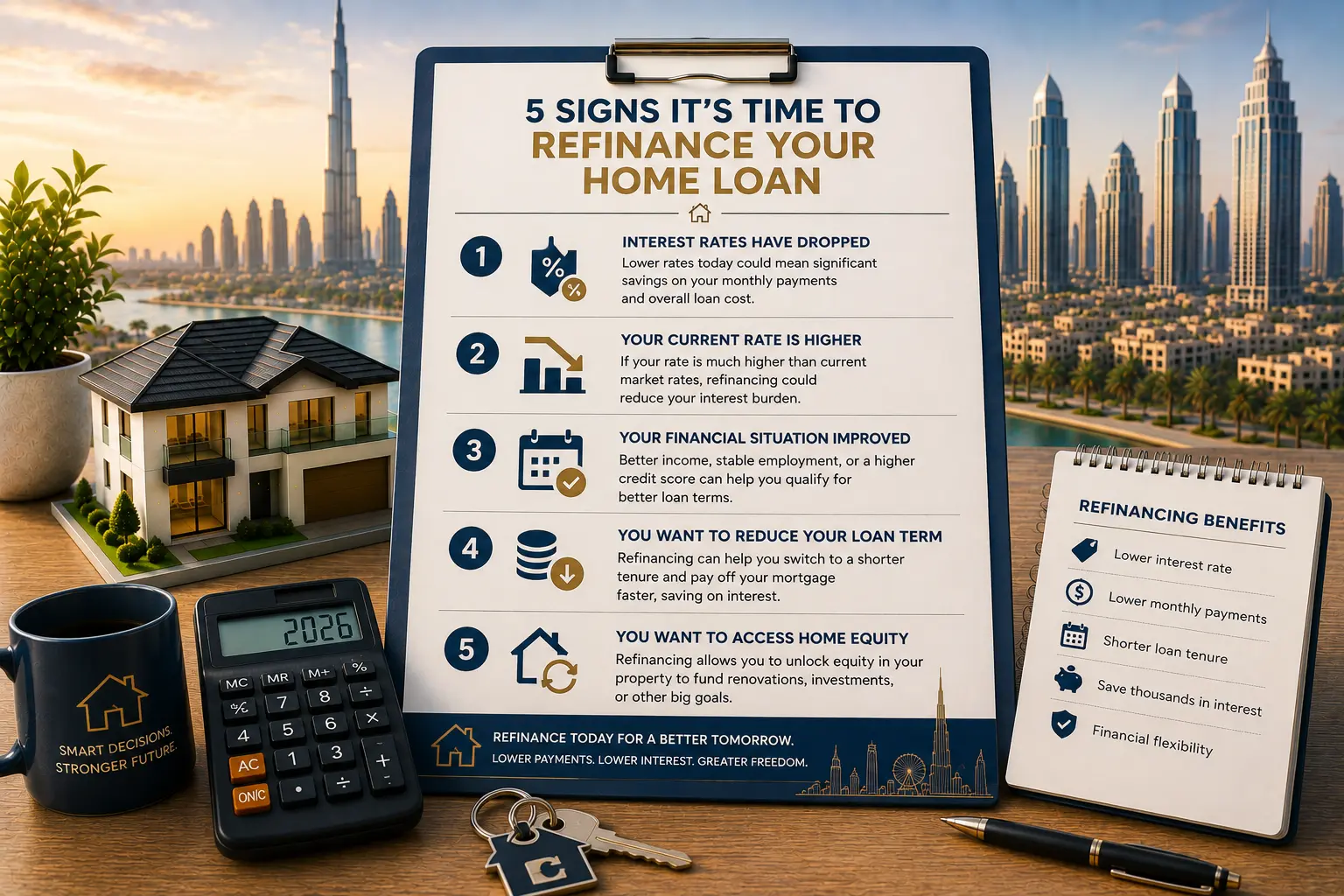
1. Your Fixed-Rate Period Has Ended
Most fixed-rate mortgages in the UAE lock in a rate for one, two, three, or five years before reverting to a variable rate linked to EIBOR plus the bank's standard margin. If your fixed period has recently ended and your monthly payment has jumped noticeably, that reversion rate may now be considerably higher than what's currently available elsewhere in the market a clear prompt to compare offers.
2. There's a Meaningful Gap Between Your Rate and Current Market Offers
If you arranged your mortgage when rates were considerably higher, or your bank's standard variable margin is wide, you may find that current market offers sit well below your existing rate. As a general guide, a gap of 0.5%–0.75% or more between your current rate and available alternatives is usually enough to make refinancing worth investigating, once switching costs are factored in.
3. Your Financial Profile Has Improved
If your income has grown, you've paid down other debt, or your credit history has strengthened since you first took out your mortgage, you may now qualify for meaningfully better pricing than you did originally. Banks price based on your current profile, not your profile at the time of your original loan, so an improved financial position can translate directly into a better refinancing offer.
4. You Want to Release Equity
If your property has appreciated in value or you've paid down a significant portion of your original loan, refinancing can allow you to release some of that built-up equity often used for renovations, funding another property purchase, debt consolidation, or other investments. This is a common reason to refinance independent of whether your interest rate itself changes significantly.
5. You Want to Restructure Your Loan Term or Rate Type
Some homeowners refinance not for savings, but to change the structure of their loan altogether moving from a variable rate to the certainty of a fixed rate ahead of anticipated rate rises, shortening the remaining term to become mortgage-free sooner, or extending the term to reduce monthly outgoings during a period of tighter cash flow.
What to Do Once You Spot These Signs
1. Request a liability letter from your current bank confirming your outstanding balance, current rate, and any applicable early settlement charges.
2. Gather offers from several banks to compare real, current pricing against your existing rate.
3. Calculate your break-even point by dividing your total switching costs by your expected monthly saving, and weigh that against how long you plan to keep the property.
4. Decide based on the numbers, not just the headline rate difference, since fees and your remaining term both materially affect the real-world benefit.
Frequently Asked Questions
1. How do I know if my fixed-rate period has ended?
Check your original mortgage offer letter or annual statement, which will specify the length of your fixed period and the date it reverts to a variable rate.
2. What rate gap makes refinancing worthwhile?
There's no fixed rule, but a gap of 0.5%–0.75% or more between your current rate and available alternatives is generally considered enough to outweigh typical switching costs, depending on your outstanding balance.
3. Can I refinance to release equity even if my rate wouldn't change much?
Yes. Equity release is a valid reason to refinance independent of the interest rate itself, though it's still worth comparing rates while you're restructuring the loan.
4. Does refinancing always involve moving to a new bank?
Not necessarily some homeowners refinance by renegotiating terms directly with their existing bank, which can sometimes reduce certain switching costs.
5. Is it worth refinancing if I plan to sell in the next year or two?
Generally, no. Switching costs typically need at least a couple of years to be recouped through monthly savings, so a short remaining holding period makes refinancing less likely to pay off.
6. How much does refinancing typically cost in total?
Total costs usually range from 1.5% to 3% of your outstanding balance, covering the capped early settlement fee, new registration, valuation, and processing charges.
Final Thoughts
Refinancing rarely announces itself with a single obvious trigger it's usually a combination of factors like these that make the case. If two or more of these signs sound familiar, it's worth running your actual numbers rather than relying on instinct alone.
See If Refinancing Makes Sense for You
ClearRate's Refinance Calculator lets you compare your current mortgage against today's market rates, so you can see your potential savings and break-even point clearly.
Message ClearRate on WhatsApp to discuss whether now is the right time to refinance.